

How Long Do Hair Extensions Last? A Complete Guide to Lifespan and Longevity
Contents:
- Understanding Hair Extension Lifespans
- Types of Hair Extensions and Their Durability
- Human Hair Extensions: The Gold Standard
- Synthetic Hair Extensions: The Budget Option
- Blended Extensions: A Middle Ground
- Installation Methods and Durability
- Tape-In Extensions
- Sew-In Wefts (Track Method)
- Fusion Extensions (Bonded)
- Micro-Link (Bead) Extensions
- Factors That Shorten Extension Lifespan
- Heat Exposure
- Poor Washing Technique
- Product Build-Up
- Sleeping Position and Friction
- Chlorine and Salt Water
- Care Practices That Extend Lifespan
- Specialised Cleansing Routine
- Protective Sleeping Method
- Heat Protectant Application
- Limiting Heat Styling Frequency
- Regular Professional Maintenance
- Swimming Protection
- Real-World Lifespan Expectations by Scenario
- Scenario: Casual Wearer, Minimal Styling
- Scenario: Daily Wearer, Regular Heat Styling
- Scenario: Daily Wearer with Professional Care
- Scenario: Active/Swimmer
- Signs Your Extensions Need Replacement
- Cost Analysis: Extension Lifespan vs. Investment
- Frequently Asked Questions
- Can extensions last longer than 6 months?
- How do I make hair extensions last longer?
- Are synthetic extensions worth buying if they only last 4 to 8 weeks?
- What’s the most durable installation method?
- Will swimming damage my extensions?
- Moving Forward with Extensions
Your fingers brush through the length of your new hair as you look in the mirror. The weight feels substantial, the texture smooth, and there’s that moment of quiet satisfaction—this is what you invested in, and it looks exactly as you imagined. But a question creeps in: how long will this investment actually last? That’s the reality question every person wearing hair extensions asks themselves at some point.
Understanding Hair Extension Lifespans
The question of how long do hair extensions last doesn’t have a single answer. Extensions are remarkably durable when properly maintained, yet they’re also investments with finite lifespans. Most quality human hair extensions last between 3 and 6 months with regular wear, though some can stretch to 12 months or beyond under optimal conditions. Synthetic extensions, by contrast, typically last 4 to 8 weeks before they begin showing significant wear.
The distinction matters because your expectations shape your maintenance routine. If you’re wearing £300 of hair extensions, understanding what affects their longevity transforms how you care for them daily. Hair extension lifespan is determined by multiple overlapping factors: the quality of hair, installation method, your daily habits, environmental conditions, and your maintenance discipline.
Types of Hair Extensions and Their Durability
Human Hair Extensions: The Gold Standard
Human hair extensions represent the premium choice because they mimic natural hair behaviour—they hold curls, accept colour treatment, and respond to heat styling like real hair. This authenticity comes with a longevity advantage. Quality human hair extensions, particularly those made from virgin or Remy hair (where the hair cuticles all run in the same direction), typically maintain their appearance for 3 to 6 months of daily wear.
Virgin hair extends this timeline even further, often lasting 6 to 12 months because it hasn’t undergone previous processing. A UK trichologist specialising in extensions, Dr. Sarah Hartley from the London Hair Institute, notes that “the cuticle structure of virgin hair remains completely intact, which means it resists tangling and matting far better than lower-grade alternatives.” This isn’t marketing speak—it’s verifiable through the microscopic alignment of hair scales.
Remy hair offers the next tier down. Still durable and maintaining cuticle alignment, it typically lasts 3 to 6 months for most wearers. Non-Remy human hair, where cuticles may be randomly oriented, is the most affordable but has the shortest lifespan—often degrading noticeably after 2 to 4 months of regular wear.
Synthetic Hair Extensions: The Budget Option
Synthetic extensions are petroleum-based fibres engineered to resemble hair. They’re substantially cheaper—often £30 to £80 for a full set compared to £150 to £400 for human hair—but their durability reflects the price difference. Standard synthetic extensions last 4 to 8 weeks before fibre breakdown becomes obvious: fraying at the ends, loss of curl pattern, and a dulled appearance.
Premium synthetic fibres, sometimes called “heat-resistant synthetics,” can last 8 to 12 weeks and tolerate moderate heat (up to 160°C), but they still degrade faster than human hair because the fibres don’t regenerate and become brittle with exposure to friction and moisture.
Blended Extensions: A Middle Ground
Some extensions mix human and synthetic hair (typically 80/20 or 70/30 ratios). These last longer than pure synthetic—usually 8 to 12 weeks—but shorter than pure human hair because the synthetic component degrades first, creating an uneven appearance.
Installation Methods and Durability
How your extensions are attached directly influences how long they last. Different installation methods create different stress patterns on both the extensions and your natural hair.
Tape-In Extensions
Tape-in extensions use medical-grade adhesive strips to bond to natural hair sections. They’re relatively non-invasive and last 4 to 8 weeks before the adhesive weakens and requires reapplication. The extension hair itself may remain in decent condition for 8 to 10 weeks, but the installation’s integrity fails first. Cost to reapply: £80 to £150 depending on location and stylist.
Sew-In Wefts (Track Method)
Sew-in extensions involve braiding natural hair into cornrows and stitching weft tracks (long rows of hair) onto these braids. The extension hair lasts 3 to 6 months, though the braids themselves need replacing every 6 to 8 weeks to prevent damage to the scalp. This method is excellent for volume and can handle heavy, textured hair, but the maintenance commitment is substantial—typically involving two salon visits monthly at £60 to £100 each.
Fusion Extensions (Bonded)
Fusion or glued extensions are attached strand-by-strand using keratin-based adhesive. Individual bonds last 2 to 3 months before they require removal and reapplication, though the hair remains wearable for 3 to 4 months if the bonds are still intact. Removal is time-intensive and requires a specialist (usually £80 to £200), as improper removal damages your natural hair. The extension hair itself can last 4 to 6 months or longer if you’re only replacing bonds, not the whole set.
Micro-Link (Bead) Extensions
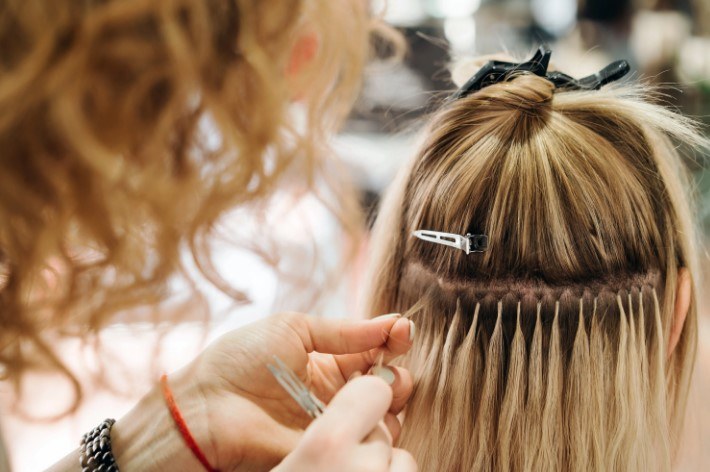
Micro-links or bead extensions use tiny metal cylinders (beads) to clamp sections of extension hair to natural hair. The advantage is reusability—the same extension hair can be removed and reattached multiple times. Individual installations last 2 to 3 months before the beads need repositioning, and the hair itself can be reused for 6 to 12 months. Repositioning costs £50 to £120 and takes 2 to 4 hours.
Factors That Shorten Extension Lifespan
Heat Exposure
Excessive heat is the enemy of extension longevity. Human hair extensions can tolerate heat styling (curling, straightening, blow-drying) but not constant exposure. Wearing synthetic extensions near radiators, in kitchens with hot steaming appliances, or in tropical climates causes accelerated fibre breakdown. Even human hair becomes brittle and prone to breakage when subjected to daily blow-drying without heat protectant products.
A reader shared her experience: “I wore my extensions for six months, but I straightened them every single day and never used heat protectant spray. By month four, the ends were absolutely fried—they looked and felt like straw. My stylist told me if I’d used a spray and limited straightening to 3 times weekly, they’d have easily lasted another two months.” This isn’t uncommon. Daily heat styling can reduce lifespan by 30 to 40 percent.
Poor Washing Technique
Hair extensions need gentle handling during washing. Rough shampooing, tangling while wet, or using hot water causes cuticle damage and bond stress. Extensions washed in water hotter than 40°C degrade faster, and washing them in the same manner as natural hair (vigorous massage) creates matting and tangling. Proper technique involves using cool or lukewarm water, gentle downward strokes, and minimal agitation. Washing extensions just once weekly (compared to three times weekly) can extend their lifespan by several weeks.
Product Build-Up
Standard conditioners, serums, and styling products accumulate on extension hair over time, especially near the bonds or tape adhesive. This build-up creates weight, reduces shine, and can accelerate bond degradation or tape loosening. Extensions require specialised cleansing products formulated to dissolve residue without stripping moisture. Using regular products costs you approximately 1 to 2 weeks of extension lifespan per month.
Sleeping Position and Friction
Friction is cumulative damage. Sleeping on your extensions without protection (using a silk pillowcase, braiding them, or wearing a protective cap) causes matting at contact points and weakens bonds. Extensions that rub against your shoulders all day experience constant friction; extensions worn up in buns or braids experience less daily friction. Simple friction management extends lifespan by 20 to 30 percent.
Chlorine and Salt Water
Chlorine from swimming pools and salt water from the sea are exceptionally harsh on extensions. A single unprotected swim in chlorinated water can cause synthetic fibres to become brittle and human hair to absorb the chlorine into its structure, causing discolouration and texture changes. If you swim regularly, your extension lifespan drops to 2 to 3 months unless you wet your natural hair with fresh water and apply leave-in conditioner before swimming, then rinse thoroughly after. This creates a protective barrier.
Care Practices That Extend Lifespan
Specialised Cleansing Routine
Extensions require products formulated specifically for extensions or for colour-treated hair (which has similar needs). Use a sulphate-free, gentle shampoo and a nourishing conditioner. Clarifying shampoos (designed to remove product build-up) should be used no more than once monthly. Cost: typically £8 to £15 per bottle, lasting 4 to 6 weeks with proper use.
What the Pros Know: Many professional stylists apply a protective conditioning treatment to extensions every two weeks—a 10-minute salon service costing £15 to £25 that noticeably extends lifespan. The treatment fills micro-cracks in the hair structure and strengthens bonds. Regular clients of my salon who use this service report extensions lasting 20 to 30 percent longer than those without treatment.
Protective Sleeping Method
Sleep protection is non-negotiable if you want extensions lasting their full lifespan. Options include: a silk pillowcase (reduces friction by 60 to 70 percent compared to cotton), a loose braid (distributes pressure), or a protective bonnet or cap (eliminates friction entirely). Cost: £10 to £20 one-time investment, worth every pound.

Heat Protectant Application
Before any heat styling, apply a heat protectant spray (formulated for extensions) to create an insulating barrier. This reduces the internal temperature of the hair fibre by 5 to 10°C—seemingly small, but significant for durability. Reapply after every wash. Cost: £6 to £12 per bottle.
Limiting Heat Styling Frequency
Reducing daily heat styling from 5 times weekly to 2 to 3 times weekly extends human hair extension lifespan by 4 to 8 weeks. This doesn’t mean abandoning styling—air-drying with a diffuser, using heatless wave methods (braiding damp hair), or embracing textured styles maximises longevity without sacrificing appearance.
Regular Professional Maintenance
Scheduling professional maintenance every 4 to 8 weeks (depending on installation method) prevents small issues becoming expensive problems. A maintenance appointment includes repositioning loose bonds, removing and replacing adhesive, treating matting, or refreshing the installation. Cost: £50 to £150 per appointment. Skipping maintenance often costs you 2 to 4 weeks of total lifespan.
Swimming Protection
Before swimming, wet your natural hair and extensions with fresh water and apply a leave-in conditioner or oil. This saturates the hair with fresh water, preventing it from absorbing chlorinated or salt water. After swimming, rinse thoroughly and condition again. This simple step prevents the lifespan reduction associated with pool and ocean use.
Real-World Lifespan Expectations by Scenario
Scenario: Casual Wearer, Minimal Styling
Someone wearing human hair extensions 2 to 3 times weekly, blow-drying without heat tools, using extensions-safe products, and sleeping on a silk pillowcase can expect 6 to 9 months of excellent quality. The extensions won’t be pristine at month 9—the ends may show slight texture changes and colour may lighten slightly—but they remain wearable.
Scenario: Daily Wearer, Regular Heat Styling
Someone wearing extensions daily, straightening or curling 3 to 4 times weekly, using standard products, and not using protective measures can expect 3 to 4 months of good quality, after which notable degradation appears. The extensions won’t suddenly fail, but they’ll look tired by month 4.
Scenario: Daily Wearer with Professional Care
Someone wearing extensions daily, using heat 2 to 3 times weekly, using extensions-specific products, sleeping on silk, and attending maintenance appointments monthly can expect 6 to 8 months of excellent quality, with graceful degradation after that period.
Scenario: Active/Swimmer
Someone swimming 2 to 3 times weekly without proper protection can expect 2 to 3 months of usable quality. Someone doing the same with pre-swimming protection (wetting with fresh water, applying leave-in conditioner) and immediate rinsing extends this to 4 to 5 months.
Signs Your Extensions Need Replacement
Extensions don’t suddenly die; they gradually degrade. Watch for these indicators:
- Visible matting at the roots that conditioning can’t resolve
- Significant shedding—more than 5 to 10 hairs per brush stroke
- Loss of shine, dullness that persists after conditioning
- Extreme tangles or knots that form within hours of brushing
- Visible fraying or splitting at the ends extending an inch or more up the hair shaft
- Bonds or tape adhesive visibly loosening or losing tackiness
- Colour fading unevenly or developing brassiness (if originally darker)
- Texture changes—straight hair becoming wavy, curly hair losing curl definition
At any of these points, extension replacement is more cost-effective than continued maintenance. You might spend £40 to £60 monthly trying to revive tired extensions when £200 to £300 buys a fresh set that lasts another 6 months.
Cost Analysis: Extension Lifespan vs. Investment
To understand whether extensions make financial sense for your situation, calculate the monthly cost. A £300 set of human hair extensions lasting 6 months costs £50 monthly in extension cost alone. Add maintenance (£60 per visit, 6 visits over 6 months = £360), specialised products (approximately £30 monthly), and occasional touch-up styling (£20 monthly). Total: approximately £120 monthly.
By comparison, monthly salon visits for styling and colour treatments on natural hair cost £60 to £100 monthly for most people, and professional treatments to improve natural hair health cost £30 to £50 monthly. Extensions aren’t cheaper than maintaining natural hair—they’re a different aesthetic investment.
The value calculation changes if you’re using extensions for confidence, professional reasons, or temporary transformation (say, for a 3-month period). For ongoing wear, the cost-per-month remains constant regardless of lifespan, so focus on which combination of quality, installation method, and style matches your lifestyle rather than chasing the absolute longest-lasting option.
Frequently Asked Questions
Can extensions last longer than 6 months?
Yes, under optimal conditions. Virgin human hair extensions worn 2 to 3 times weekly with meticulous care (silk pillowcase, monthly professional maintenance, heat protectant use, weekly specialised washing) can last 9 to 12 months. However, “lasting” doesn’t mean looking perfect—by month 9 or 10, the ends typically show texture changes and the overall appearance is less refined than months 1 to 6.
How do I make hair extensions last longer?
The most impactful practices are: (1) reducing heat styling frequency, (2) sleeping on a silk pillowcase, (3) using extensions-specific products, (4) attending professional maintenance appointments, and (5) protecting extensions before swimming. These five practices alone can add 2 to 4 months to extension lifespan compared to no care routine.
Are synthetic extensions worth buying if they only last 4 to 8 weeks?
Synthetic extensions make sense if you: want to try extensions without major investment (£40 to £80 vs. £200 to £400), enjoy changing styles frequently without damaging natural hair, or want temporary extensions for an event. They’re not cost-effective for long-term wear because cost-per-month approaches human hair extensions when maintenance is factored in.
What’s the most durable installation method?
Micro-link extensions allow the hair to be reused multiple times, making them the most durable long-term option if you plan to wear extensions for over 12 months. The extension hair itself lasts 6 to 12 months, and only the beads and repositioning (£50 to £120 every 2 to 3 months) is ongoing cost. For first-time wearers prioritising simplicity, tape-in extensions offer the best balance of durability (4 to 8 weeks installation lifespan) and ease of application.
Will swimming damage my extensions?
Unprotected swimming damages extensions significantly. Chlorine is absorbed into human hair, causing discolouration and brittleness. Salt water causes similar damage plus tangles. However, wetting extensions with fresh water and applying leave-in conditioner before swimming creates a protective barrier. This reduces damage to a level comparable to a regular wash day. If you swim regularly, extensions require more frequent maintenance and product investment to offset chlorine and salt damage.
Moving Forward with Extensions
The question of how long hair extensions last has real answers grounded in hair science, installation method, and personal maintenance discipline. A quality set of human hair extensions represents a 3 to 6 month investment that can be extended to 9 to 12 months through deliberate care practices. Synthetic extensions serve a different purpose—short-term styling flexibility rather than long-term wear.
If you’re considering extensions, the timeline question is secondary to this one: which installation method and quality level align with your daily habits and maintenance commitment? Someone unwilling to use heat protectant spray or sleep on a silk pillowcase will always experience shorter extension lifespans than someone treating extensions as a regular (if temporary) part of their appearance.
The true cost of extensions isn’t the upfront purchase—it’s the monthly maintenance, products, and professional care required to keep them looking excellent. Calculate that honestly. If the total monthly investment suits your budget and lifestyle, extensions deliver aesthetic value that justifies the cost. If you’re hoping to buy extensions and wear them untended for 12 months, reset your expectations now. Extensions reward care; they don’t reward neglect.
Ready to commit to extensions? Start with a consultation with a stylist specialising in extensions—specifically one with experience in your hair type and the installation method you’re considering. They’ll assess how long extensions will realistically last on you, given your specific hair texture, lifestyle, and maintenance habits. That honest conversation is far more valuable than generic timelines.